
A Permanent Upgrade from Loose, Slipping Dentures
If you’ve worn dentures for years, you know their limitations better than anyone. The adhesive that wears off by mid-afternoon, the sore spots, the foods you’ve quietly given up, and the worry that they’ll shift at the worst possible moment. Implant-supported dentures fix the problem at its source by anchoring your denture to dental implants placed in your jawbone, so it stays secure through every meal and conversation. At Rubino Periodontics & Implant Dentistry in Bradenton, our board-certified periodontists have been helping Manatee County patients make exactly this switch since 1988.
Many of the patients we treat for implant-supported dentures are longtime denture wearers who’ve reached the point where conventional dentures just aren’t working anymore. Some have worn dentures for a decade or more. The good news is that the switch is well-established, predictable, and, for most patients, life-changing.
Call 941-209-5052 today to schedule your consultation at our Bradenton periodontal office. We welcome patients from Bradenton, Palmetto, Ellenton, and Anna Maria Island.
Find out if you may be eligible
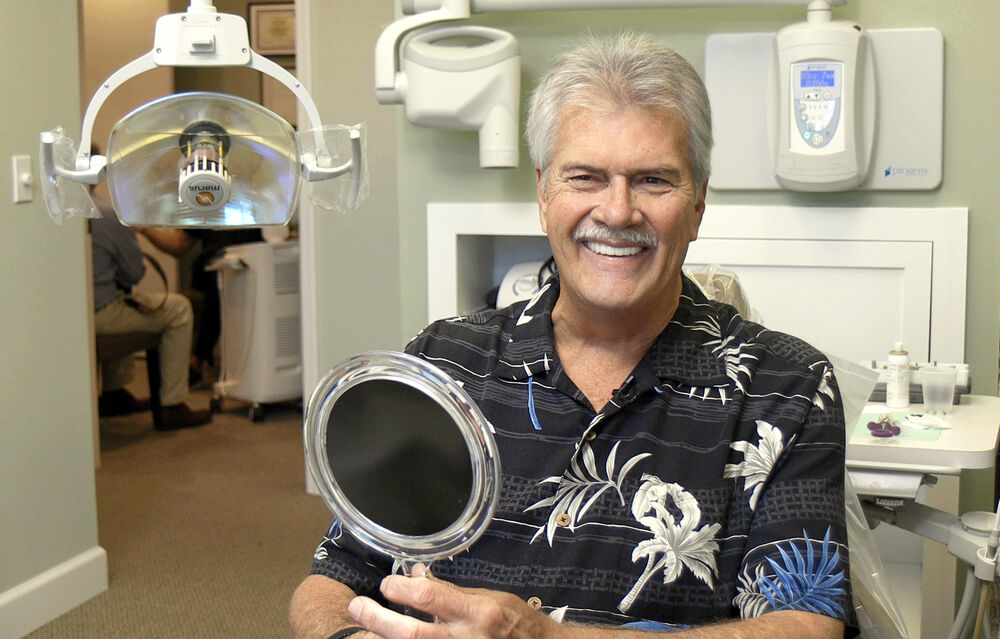
Why Dr. Rubino’s Bradenton Patients Keep Coming Back
The thread that runs through our Bradenton reviews is loyalty. Patients stay with our practice for years, refer their families, and in some cases drive a long way to keep seeing the same familiar faces. For a decision as significant as implant-supported dentures, that kind of long-term relationship matters.
Sandi O., a longtime Bradenton patient, summed up the sentiment: “I wouldn’t go anywhere else even though the office is an hour from my home.”
A few reasons Manatee County patients keep choosing our team:
- The original practice was founded in Bradenton in 1988. Dr. Thomas Rubino opened our 59th Street office, and it remains our home base. Many patients have been with us for well over a decade.
- Returning patients trust us with bigger procedures. Leslie L., who has had implant work done with us before, noted that “scheduling, treatment, billing all happen like clockwork.” When patients come back for full-mouth treatment, it’s because the smaller procedures earned that trust first.
- New residents choose us to take over their care. Dana B., who recently moved to Florida and needed a specialist, called us and was seen the next morning. Patients who find us as newcomers tend to stay.
- Smile Makeover veterans program. Dr. Ryan Rubino founded the practice’s program providing free implant treatment to local Manatee County veterans.
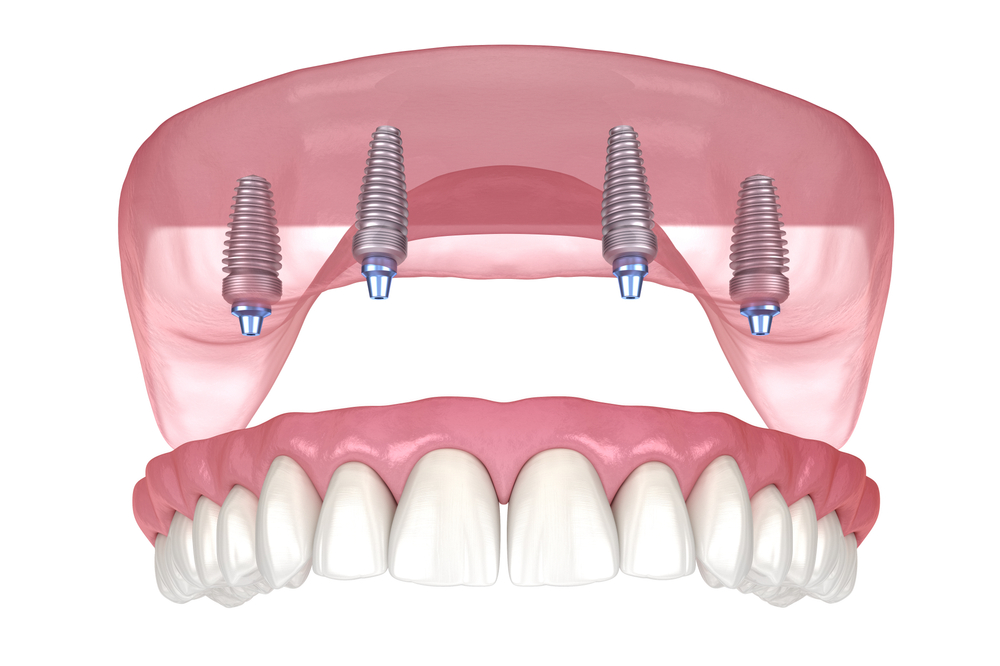
What Are Implant-Supported Dentures?
Implant-supported dentures combine the full-arch coverage of a traditional denture with the stability of dental implants. Rather than resting on your gums and depending on suction or adhesive, the denture attaches to titanium implants placed in your jawbone.
There are two main types:
- Fixed implant-supported dentures stay permanently attached and are removed only by your periodontist. They function most like natural teeth.
- Removable (snap-on) implant-supported dentures clip securely onto the implants and detach for cleaning, combining stability with the convenience of a removable appliance.
Most full arches use four to six implants. When placed by a board-certified periodontist, the implants commonly last decades, and the denture itself typically lasts 15 to 20 years with good care.
Are You a Candidate for Implant-Supported Dentures?
Most patients missing all or most of their teeth are candidates, especially long-term denture wearers, ready for a permanent, stable solution.
Good candidates typically include:
- Current denture wearers who are frustrated by slipping, sore spots, or adhesive
- Patients missing all teeth in one or both arches
- Patients with adequate jawbone or the willingness to undergo grafting
- Adults in reasonably good general health
Conditions that may delay treatment include uncontrolled diabetes, heavy smoking, untreated periodontal disease, and significant bone loss. A 3D scan at your Bradenton consultation will clarify what’s possible.
The Implant-Supported Denture Process at Our Bradenton Office
The full process generally takes three to nine months, depending on whether extractions or grafting are needed.
- Consultation and 3D planning. A clinical exam, 3D scan, and conversation about your goals and history. We map implant positions digitally before surgery.
- Implant placement. Titanium implants are placed in your jawbone under local anesthetic or sedation.
- Healing and integration. Over three to six months, the implants fuse with your jawbone through osseointegration.
- Denture placement. Your custom denture is fixed or fitted to the implants for a secure, complete smile.
Our Bradenton office offers local anesthetic, oral sedation, and IV sedation.
Implant-Supported Denture Cost in Bradenton
Cost varies by case, but Manatee County patients should generally plan for $15,000 to $30,000 per arch, with both arches typically running $30,000 to $60,000. The range reflects the number of implants, the denture type, and any preparatory work.
Most insurance plans cover a portion of the surgical phase and extractions. Our Bradenton front office team, including Laurie on the finance side, will review your benefits in detail, and we offer financing through third-party partners with monthly payment options.

Making the Switch from Dentures to Implant-Supported Dentures
If you’ve worn traditional dentures for years, switching to implant-supported dentures is a bigger adjustment than it sounds, and a welcome one. Here’s what longtime denture wearers should know.
What Changes in Your Daily Routine
The biggest difference is what disappears from your routine. No more adhesive, no more soaking cup on the counter if you choose a fixed denture, and no more removing your teeth to clean food out from underneath. With a fixed denture, you brush and use a water flosser much like natural teeth. With a removable snap-on, you detach it for cleaning, but it locks firmly in place the rest of the time. Most patients describe the new routine as simpler than what they were doing before.
Addressing Bone Loss from Years of Denture Wear
This is the part many longtime denture wearers don’t expect. Wearing traditional dentures for years allows the jawbone to shrink, because nothing is stimulating the bone the way tooth roots once did. By the time some patients come in, there isn’t enough bone left to place implants without help. In those cases, supplemental procedures can rebuild the foundation:
Bone grafting restores lost width and height in the jaw, so implants have something solid to anchor into.
Sinus lift adds bone height in the upper back of the jaw, where the sinus cavity can limit available space.
These procedures add time to the overall timeline, but they’re routine in periodontal practice and often make implant-supported dentures possible for patients who’d been told elsewhere they weren’t candidates.
The Adjustment Period
Patients converting from a traditional denture usually need a short adjustment period to relearn how to chew with a stable appliance that doesn’t lift or shift. After a few weeks, most stop thinking about their teeth altogether. The stability also tends to restore confidence quickly, since the constant low-level worry about a denture slipping simply goes away.
Frequently Asked Questions
In most cases, no. Years of denture wear do cause bone loss, but bone grafting or a sinus lift can often rebuild enough foundation to place implants. Long-term denture wearers are among the most motivated candidates we see, because they understand firsthand what conventional dentures can and can’t do. A 3D cone beam CT scan at your Bradenton office will give us a complete picture of your bone volume and tell us exactly what your case needs before any treatment begins.
Usually yes. We often modify your existing denture so you can continue wearing it during the healing phase, so you’re never without teeth while your implants integrate. The modification is typically straightforward and keeps your appearance and function consistent throughout treatment. Your care team will walk you through what to expect at each stage so there are no surprises.
Coverage varies by plan, but many policies cover part of the surgical phase or extractions when they’re deemed medically necessary. Some patients also see partial coverage for the prosthetic component depending on how their benefits are structured. Laurie and our front office team will review your benefits in detail before treatment begins so you have a clear picture of your out-of-pocket costs. We also work with financing options for patients who want to spread the investment over time.
The first few weeks after placement focus on protecting the implant sites while osseointegration takes place, which is the process of the titanium posts fusing with your jawbone. You’ll have scheduled follow-up visits so our team can monitor healing and address any questions as they come up.
Once fully healed, aftercare is straightforward: brush your denture and the attachment points daily, rinse under the bar or around the snaps, and keep any regular periodontal maintenance appointments. Our team will give you a clear home care routine specific to your restoration type before you leave the office.
During the healing period, you’ll follow a soft-food diet to avoid putting pressure on the implant sites before they’ve fully integrated. Most patients progress from liquids to soft foods to a normal diet over the course of several weeks, and your care team will guide you through each phase.
Once healed, implant-supported dentures restore significantly more chewing function than conventional dentures, and most patients can return to foods they had given up entirely. That said, extremely hard or sticky foods are still worth avoiding to protect the denture prosthetic itself from unnecessary wear.
BOOK AN APPOINTMENT