
Permanent Single-Tooth Replacement from Sarasota’s Board-Certified Periodontists
Losing a single tooth changes more than just your smile. A failed root canal, a cracked tooth from years of grinding, a stubborn tooth that fractured below the gumline, a sports injury at the pickleball court, or a congenitally missing lateral incisor you’ve been hiding for decades. Whatever the reason, you have options that go well beyond a removable partial or a traditional bridge. Single tooth dental implants from Rubino Periodontics give Sarasota patients a permanent, freestanding replacement that looks and functions like a natural tooth, without putting any pressure on the teeth next to it.
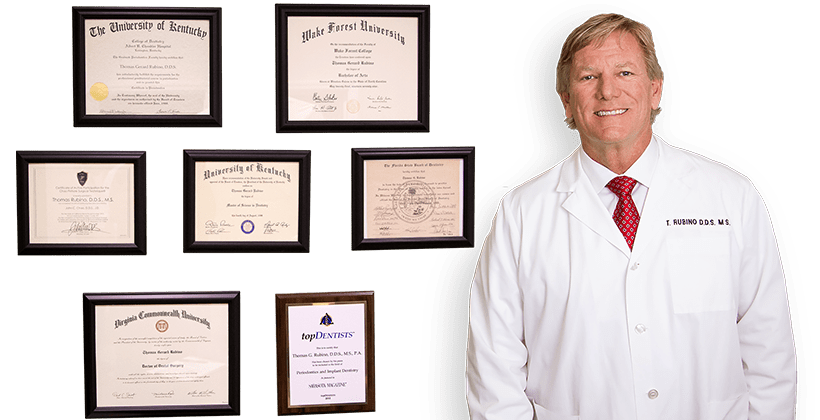
Our board-certified periodontists have been placing dental implants in Sarasota and Lakewood Ranch since 1988. Dr. Thomas Rubino has been recognized as a Top Dentist in Periodontics and Implant Dentistry by Sarasota Magazine every year since 2011. Call 941-201-3055 today to schedule your single tooth implant consultation at our Sarasota/Lakewood Ranch office.
Why Choose Rubino Periodontics for Single Tooth Implants in Sarasota
Many general dentists place implants alongside their other work. Periodontists place implants as a primary focus of their training and practice. A few reasons Sarasota patients choose our board-certified team for single-tooth cases:
- Sarasota Magazine Top Dentist Since 2011: Dr. Thomas Rubino has appeared in the Top Dentists list every year for over a decade, voted on by his peers in the Sarasota dental community.
- Anterior Aesthetic Cases: Single-tooth implants in the front of the mouth are the hardest cases in implant dentistry. The implant has to be positioned to support a crown that emerges from the gumline the way a natural tooth does. This is exactly the kind of case that gets referred to a periodontist.
- Same-office Surgical and Prosthetic Phases: From the extraction (if needed) through the final crown, your case stays with our Sarasota team.
- Coordinated Medical Care: Our team includes registered nurses who coordinate with your primary physician on medications, blood thinners, and any systemic health considerations before surgery.
One recent Sarasota patient, Dave C., described his experience after being referred for periodontal treatment that included implant work: “I was genuinely impressed by Dr. Rubino’s bedside manner. He is calm, confident, and takes the time to ensure you fully understand what’s being done and why.”
What Is a Single-Tooth Dental Implant?
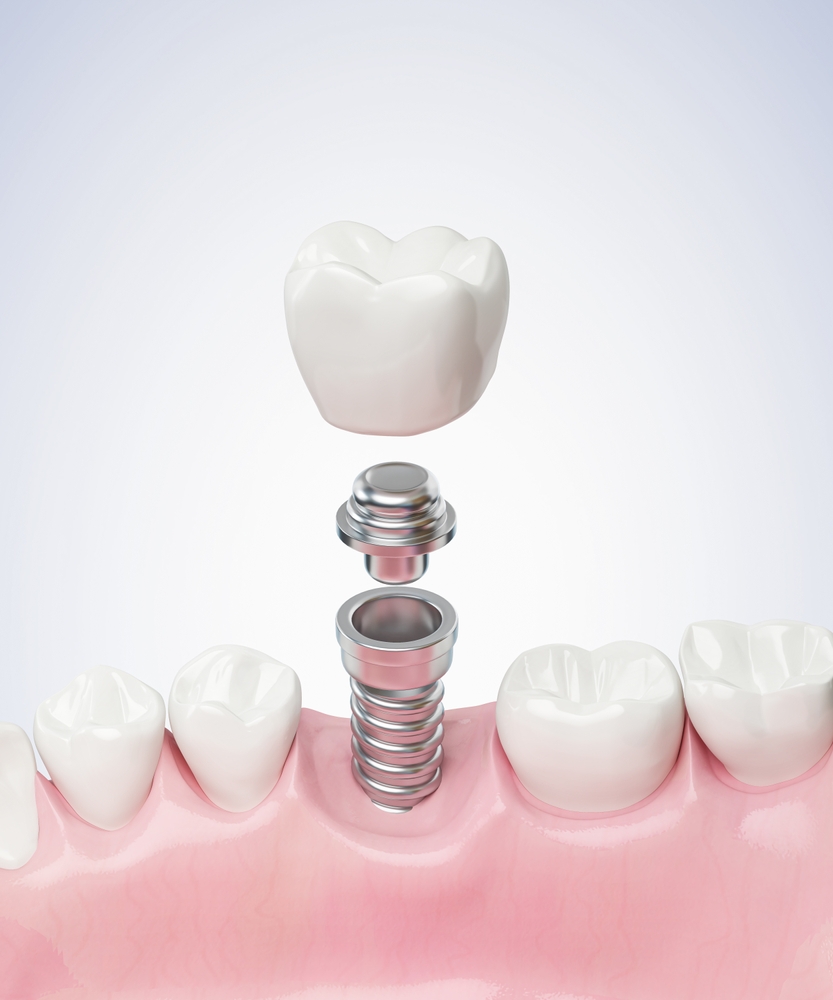
A single tooth implant is a freestanding tooth replacement made up of three pieces: a titanium implant post that takes the place of the natural tooth root, an abutment that connects the post to the visible portion of the replacement tooth, and a custom crown that sits on top. The titanium post integrates with your jawbone over a period of three to six months in a biological process called osseointegration, creating a stable foundation that functions like a natural tooth root.
What separates a single tooth implant from other tooth replacement options is its independence. A traditional bridge requires shaving down the two healthy teeth adjacent to the gap so they can serve as anchors. A removable partial denture relies on clasps that hook around your remaining teeth. An implant does neither. It stands alone in the space where your natural tooth used to be, and it preserves the bone in your jaw the same way a natural tooth root would.
Common Reasons Sarasota Patients Need a Single Tooth Implant
Most single-tooth implant patients at our Sarasota office fall into one of a few categories. Recognizing where you fit can help you understand what to expect at your consultation.
Failed Root Canal
A tooth that has had a root canal can still fail years or even decades later. Reinfection, root fracture, or a cracked crown can all force the tooth to come out. When a previously root-canaled tooth fails, an implant is often the cleanest path forward because the tooth is already non-vital, and patients are typically ready for a permanent solution rather than another round of intervention.
Cracked or Fractured Tooth
High-stress lifestyles, nighttime grinding, and aging restorations all contribute to vertical root fractures and cracks that extend below the gumline. Once a tooth cracks beneath the gum, it cannot be saved. The tooth is extracted, the area is allowed to heal (sometimes with bone preservation grafting at the time of extraction), and an implant is placed.
Sports and Active-Lifestyle Injuries
Sarasota and Lakewood Ranch patients are active. Pickleball, tennis, cycling, paddleboarding off Siesta Key, and even a fall on a Lakewood Ranch sidewalk can knock out a front tooth or damage one beyond saving. For active adults who want to get back to their routine without a removable partial flopping around, a single tooth implant is the obvious answer.
Congenitally Missing Teeth
Some patients reach midlife with a gap that has always been there. Congenitally missing lateral incisors are the most common version of this, and many adults finally address them in their 40s, 50s, or 60s after years of hiding the gap or wearing an old retainer with a fake tooth attached. An implant gives you a permanent, natural-looking tooth in a space that has been empty since childhood.
Severe Decay Beyond Repair
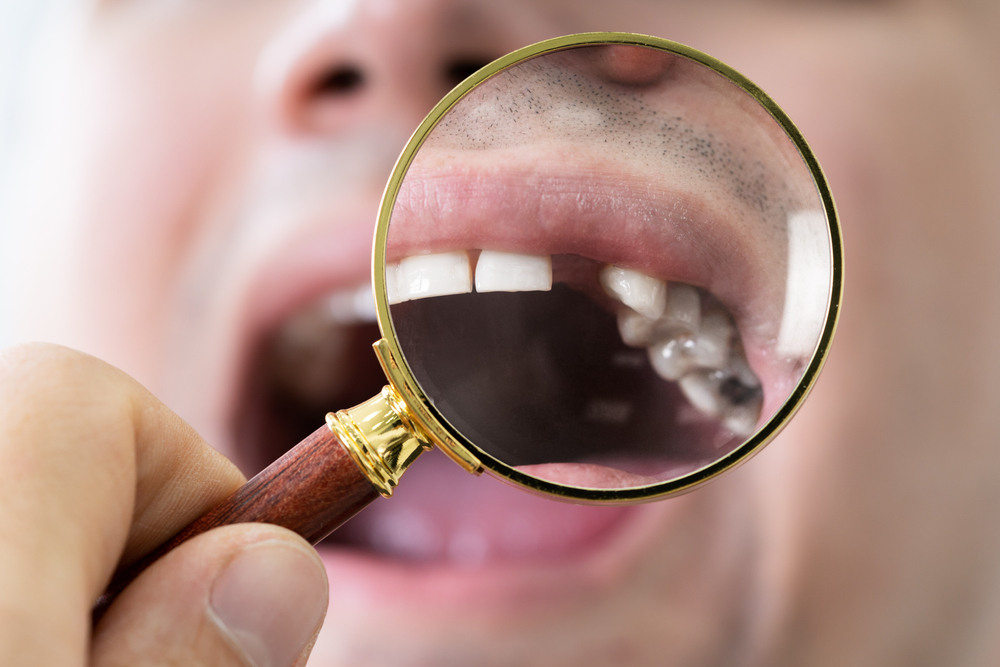
When decay reaches deep into the root or destroys so much of the tooth that there isn’t enough structure left for a crown, extraction is the only option. A single tooth implant replaces the tooth without affecting any of its neighbors.
Advanced Periodontal Disease
Late-stage periodontal disease can loosen a single tooth enough that it has to be removed, even if the rest of your mouth is reasonably healthy. As periodontists, we handle both the periodontal stabilization and the implant placement in the same office.
Failed Older Restorations
A bridge that has lasted 20 years and finally given out, a crown that keeps coming loose, or a tooth that has been patched too many times. At some point, the cost of continued repair exceeds the cost of doing it right with an implant.
Are You a Candidate for a Single Tooth Implant?
Most adults who have lost or are about to lose a single tooth are candidates for an implant. The general requirements are reasonable bone volume in the area, healthy gum tissue, and overall health stable enough to support healing.
Good candidates typically include:
- Adults who have lost a tooth recently or are scheduled for extraction
- Patients with a failing crown, bridge, or root canal that has reached the end of its life
- Adults with a congenitally missing tooth who are ready to address it
- Active patients who don’t want a removable partial denture
- Patients with healthy gums and an adequate jawbone (or a willingness to undergo a minor grafting procedure)
Conditions that may complicate or delay treatment include uncontrolled diabetes, heavy smoking, untreated periodontal disease, and significant bone loss in the implant site. The 3D scan at your Sarasota consultation will give us a clear picture of what’s possible.
The Single Tooth Implant Procedure at Our Sarasota Office
The full process generally takes between four and eight months from consultation to final crown, depending on whether an extraction or grafting is needed.
Consultation and 3D Planning
Your first visit includes a clinical exam, a 3D cone beam CT scan, and a conversation about your goals and medical history. We map out the implant position digitally so we know exactly where the post is going before you’re in the chair.
Extraction and Bone Preservation (If Needed)
If the tooth is still in place, we extract it as gently as possible and often place bone grafting material into the socket to preserve the bone width and height that will support the implant. In many cases, the extraction and the implant placement can be done at the same appointment.
Implant Placement
The titanium post is placed into the jawbone through a small opening in the gum tissue, under local anesthetic or oral sedation, depending on your preference. Most patients are surprised by how short and uneventful the appointment is. You leave with the implant in place and a temporary tooth in the visible space if the implant is in the front of your mouth.
Osseointegration
Over the following three to six months, the implant integrates with your jawbone. You wear a temporary and follow normal eating and oral hygiene routines.
Abutment and Crown Placement
Once integration is complete, the abutment is attached to the implant, and an impression or digital scan is taken for the final crown. The custom crown is fabricated to match your existing teeth in shape, shade, and size, then permanently attached to the abutment.
Single Tooth Implant Cost in Sarasota
A single tooth implant in the Sarasota area generally falls between $3,500 and $6,500 when treatment is provided by a board-certified periodontist using high-quality components and a custom porcelain or zirconia crown. The range reflects whether additional steps are needed.
Factors that affect the cost include:
- Extraction of the existing tooth (if still in place)
- Bone grafting in the extraction socket or implant site
- Sinus lift, if the implant is in the upper back of the mouth
- Sedation type
- The final crown material
Most dental insurance plans cover a portion of the surgical phase and the crown, often more than patients expect. Our Sarasota front office team will run your benefits in detail before treatment begins. We also offer financing through third-party partners, which spreads payments out over 24, 36, or 60 months.
Living with a Single Tooth Implant in Sarasota
A well-placed single tooth implant becomes part of your daily life within a few weeks of the final crown. You brush and floss normally, eat what you want, and stop thinking about the tooth altogether. Patients who were nervous about how it would look or feel are often surprised by how quickly they forget which tooth is the implant.
Eating
You can return to the foods that have been difficult or off-limits. Steak at Selva Grill, stone crab claws at Owen’s Fish Camp, crusty bread, raw apples, and corn on the cob all come back into rotation without thinking about it.
Aesthetics
For front teeth, a properly placed implant with a custom-designed crown is indistinguishable from your natural teeth in conversation, photographs, and close-up. Patients who avoided smiling in pictures often comment on how quickly that habit goes away.
Aftercare
Brush and floss the implant exactly the way you would a natural tooth. Come in every six months for a cleaning and check-in. That’s it. Most single-tooth implants last 25 years or more. Many last a lifetime. The crown on top of the implant may need replacement after 15 to 20 years, depending on wear.

Frequently Asked Questions
A bridge requires shaving down the two healthy teeth on either side of the gap to support the bridge. A single tooth implant is freestanding and doesn’t affect the neighboring teeth at all. Bridges typically last 10 to 15 years before needing replacement. Implants typically last 25+ years and often a lifetime.
In most cases, yes, though there’s often been some bone loss in the area that may require a bone graft before or during implant placement. A 3D CT scan at your Sarasota consultation will tell us exactly what’s needed.
Anterior dental trauma is one of the most common reasons we place single tooth implants. The process depends on how long ago the injury was, whether the tooth was reimplanted unsuccessfully, and how the bone has healed since. A 3D scan and clinical exam will let us walk through the timeline and your options.
General dentists who place implants are doing surgical work in addition to their primary practice. Periodontists are surgical specialists whose training centers on the bone and soft tissue management that implant cases require. For front-tooth cases, especially, that training makes a measurable difference in the final aesthetics. Sarasota has several implant providers, so it’s worth asking about board certification, total case volume, and where the surgical phase is actually performed before committing.
Most patients are eating normally within a few days. You’ll be on soft foods for the first week to protect the surgical site, then return to a normal diet as comfort allows. The implant itself takes three to six months to fully integrate, but daily life resumes much sooner.
BOOK AN APPOINTMENT
